The history of street photography
The history of street photography dates back to the invention of the camera. But it was not until the 20th century that the genre truly developed into an art form.
The origins of street photography
The origins of street photography can be traced back to the early 20th century, when photography enthusiasts began experimenting with capturing urban life. One of the first known street photographers was Eugène Atget, who worked in Paris in the early 20th century. Atget was known for his images of the streets and architecture of Paris and is often considered the father of street photography.
In the 1930s and 1940s, Henri Cartier-Bresson began photographing the world. He was one of the founders of photojournalism and known for his ability to capture decisive moments. Cartier-Bresson was also a pioneer in street photography and is known for his images of everyday life in cities around the world.
Smaller cameras = more street photographers
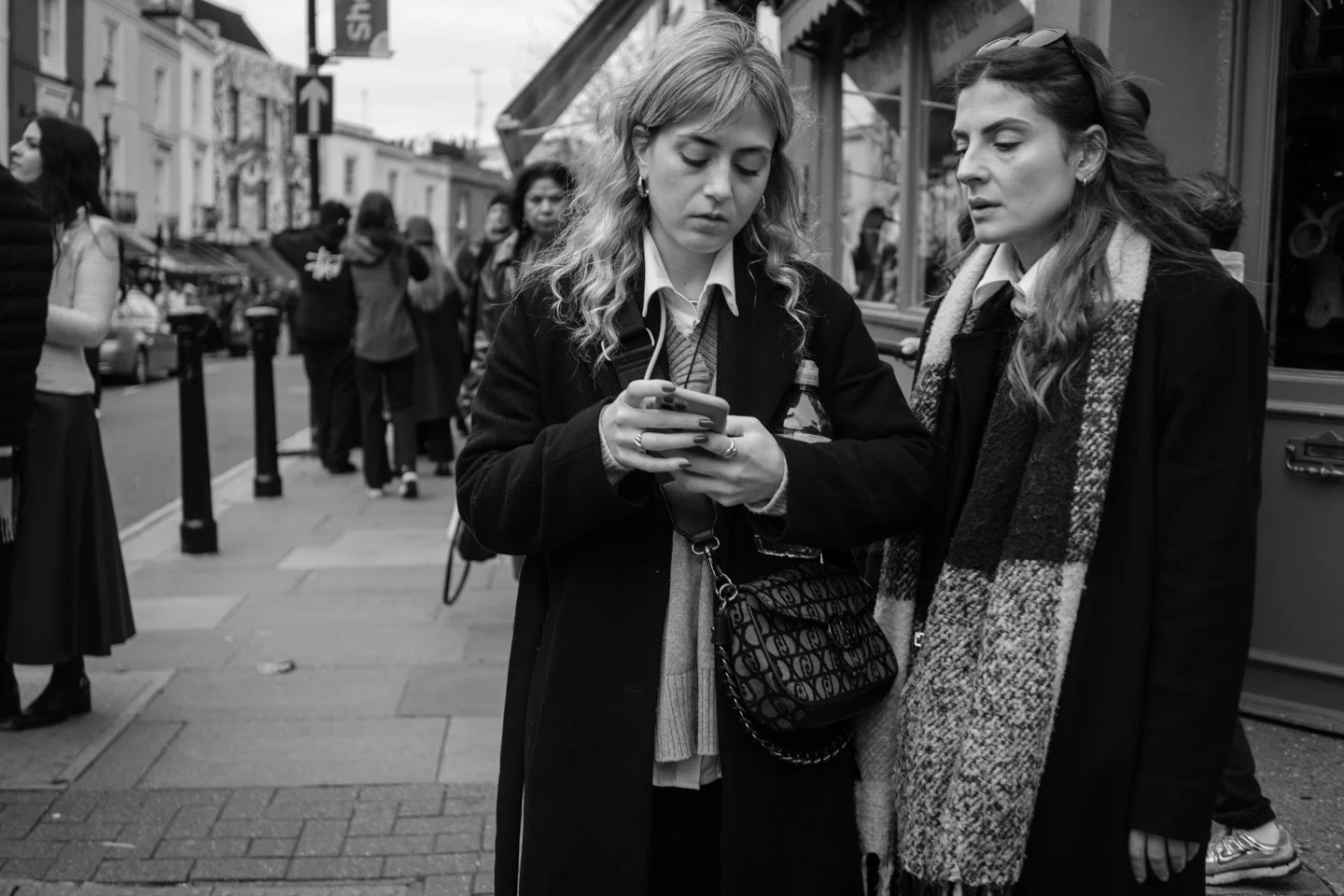
After World War II, street photography became increasingly popular and began to develop as an art form. Photographers such as Robert Frank and Garry Winogrand were famous for their images of American life in the 1950s and 1960s. In the 1970s and 1980s, street photography developed further and new styles and techniques were introduced. An important factor in this was, of course, the development of increasingly smaller cameras. Suddenly, it was no longer necessary to lug around a tripod and other equipment.
For me, this is the most interesting period. Let's be honest: we all love those gentlemen in top hats and the rascals on the street corner. It's not nostalgia, but simply a delightful black-and-white image to look at. It reminds me of old movies, slapstick, and also a little bit of a time when people seemed to be more carefree. Back when smoking was still healthy, so to speak.
From black and white to color
One of the most important street photographers of this period was Alex Webb. Webb was best known for his color photographs and his ability to create complex, multi-layered images. He traveled the world taking photographs and was renowned for his images of Latin America and the Caribbean. Webb's work has often been compared to that of painters because of the rich colors and layering of his images.
In the 1990s and 2000s, street photography became increasingly recognized as an important art form and began to reach a wider audience. Photographers such as Martin Parr and Bruce Gilden were known for their satirical and sometimes provocative images of modern life. New styles of street photography also emerged, including "vernacular photography," in which photographers focus on capturing the unintended beauty of everyday objects and scenes.
From black and white to color
One of the most important street photographers of this period was Alex Webb. Webb was best known for his color photographs and his ability to create complex, multi-layered images. He traveled the world taking photographs and was renowned for his images of Latin America and the Caribbean. Webb's work has often been compared to that of painters because of the rich colors and layering of his images.
In the 1990s and 2000s, street photography became increasingly recognized as an important art form and began to reach a wider audience. Photographers such as Martin Parr and Bruce Gilden were known for their satirical and sometimes provocative images of modern life. New styles of street photography also emerged, including "vernacular photography," in which photographers focus on capturing the unintended beauty of everyday objects and scenes.
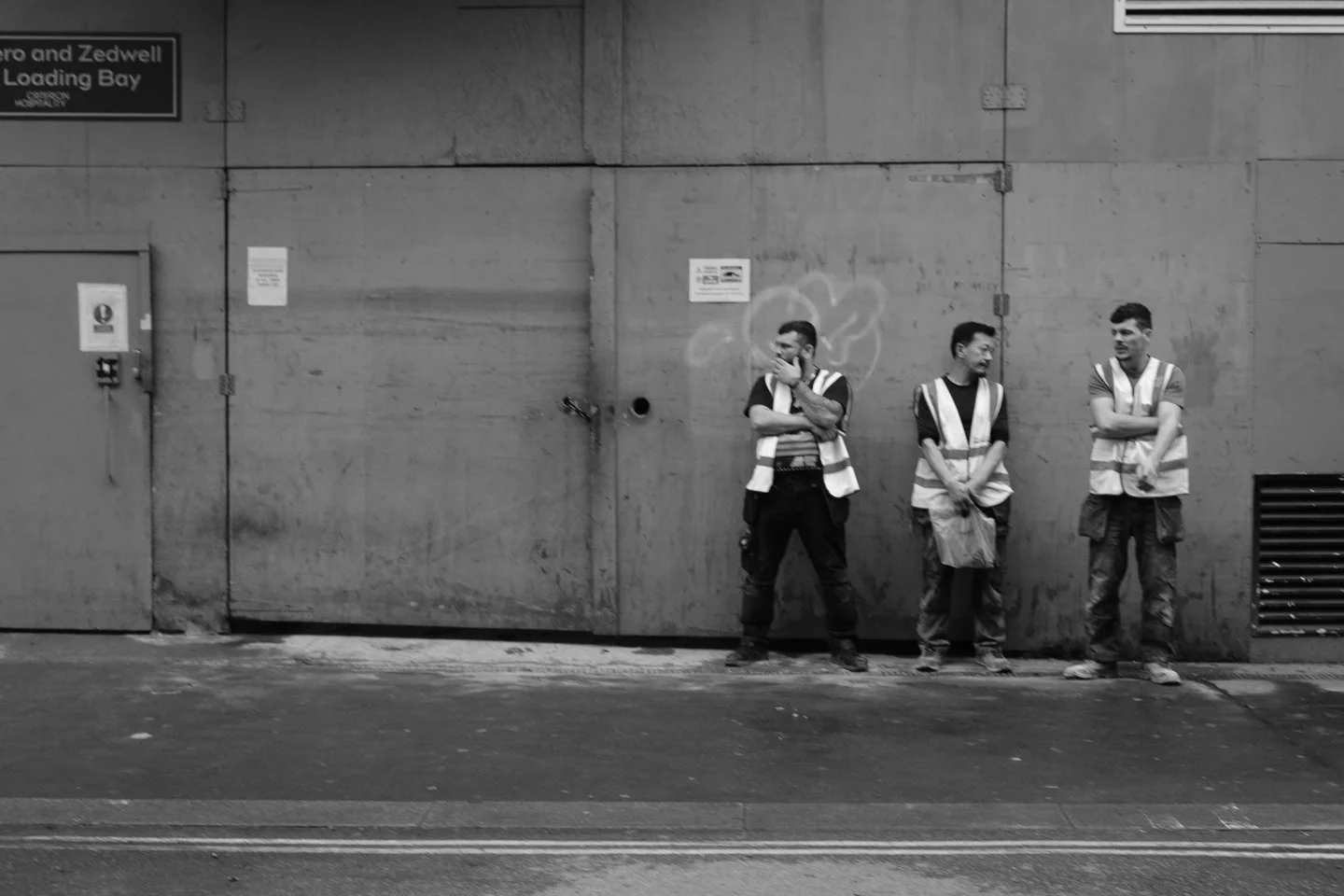
The marvels of daily life are exciting; no movie director can arrange the unexpected that you find in the street.
- Robert Doisneau
Digital photography and social media are changing street photography
The rise of digital photography and social media has further changed and expanded street photography. Photographers can now easily share their work and feedback from a global audience. This has led to a greater diversity of styles and approaches to street photography.
In recent years, street photography has evolved and expanded, with more emphasis on themes such as urban change, migration, identity, and politics. Street photographers such as Daido Moriyama and Trent Parke have pushed the boundaries of street photography with their experimental techniques and abstract images. Valérie Jardin talks about contemplative photography, and I really like that term. Photograph what you feel, not necessarily just what you see. It offers plenty of room for personal interpretation.
Criticism of street photography
The rise of digital photography and social media has further changed and expanded street photography. Photographers can now easily share their work and feedback from a global audience. This has led to a greater diversity of styles and approaches to street photography.
In recent years, street photography has evolved and expanded, with more emphasis on themes such as urban change, migration, identity, and politics. Street photographers such as Daido Moriyama and Trent Parke have pushed the boundaries of street photography with their experimental techniques and abstract images. Valérie Jardin talks about contemplative photography, and I really like that term. Photograph what you feel, not necessarily just what you see. It offers plenty of room for personal interpretation.
The history of street photography shows how a beautiful art form has developed over more than a century. What began as capturing urban reality with the first cameras grew into a valued photographic genre that reflects the essence of everyday life. Pioneers such as Eugène Atget and Henri Cartier-Bresson laid the foundations and inspired later generations of photographers to explore new avenues in style, technique, and expression. With the advent of smaller cameras, color, digital techniques, and social media, street photography continues to innovate and expand. It is not only a look back at the past, but above all a lively, ongoing dialogue between photographer, street, and viewer.
Key events in street photography
There have been a number of defining moments in the history of street photography. The list below is by no means exhaustive, but it gives you a nice overview. Some things are obvious, but hopefully some will make you think.
The rise of the New York School of Photography
The photographers of the New York School of Photography, including Robert Frank and Diane Arbus, took groundbreaking street photographs in the 1950s and 1960s that changed the way people viewed the world.
The invention of color film
The invention of color film in the 1930s made it possible to capture street scenes in color, allowing photographers to discover new ways to tell their stories.
Street Photography as a Political Statement
In the 1960s and 1970s, photographers such as Danny Lyon and Bruce Davidson used their cameras as a political statement, documenting social unrest and change in the United States.
Invention of the portable camera
The invention of the portable camera in the late 19th century, such as the Leica camera in 1925, made it easier for photographers to take pictures on the street and capture spontaneous moments.
The Magnum Photos Agency
Founded in 1947, the Magnum Photos Agency played a crucial role in the development of street photography. Magnum photographers, such as Henri Cartier-Bresson and Garry Winogrand, became known for their groundbreaking work on the streets.
Digitization of photography
The digital revolution of the 1990s and 2000s took street photography to new heights, allowing photographers to no longer rely on film and focus on capturing the moment.
The rise of Instagram
With the rise of Instagram and other social media platforms, it has become easier for photographers to share their work with a wider audience and find new inspiration from others in the street photography community.